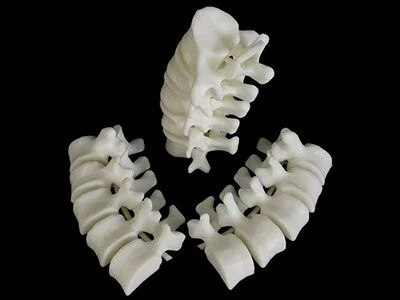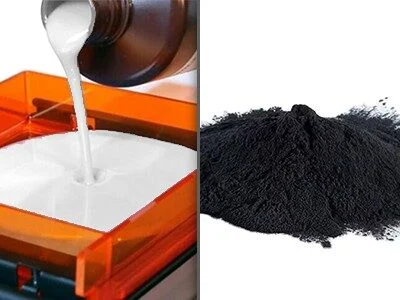
Opening a detailed review regarding Optical Light Bonding (Beam Fusion Process) system employing progressive building construction sectors.
Focused Beam Bonding (SLS) yields a efficient constructive creation approach designed for fabricating sophisticated layered items. That guide analyzes comprehensively into the primary fundamentals of SLS, considering everything from the ingredients used—typically thermoplastics like nylon—to the hardware performance and various utilizations. Apprehending the peculiarities of SLS enables technicians to access its maximum efficiency for speedy fabrication and low-volume making. We additionally explore general problems and progressive paths in this innovative arena.
Reasonably-priced SLS 3D Units: Rendering Powder Bed Fusion Obtainable Previously a territory limited to substantial companies, Selective Laser Sintering (SLS) 3D construction is increasingly affordable to a inclusive group arising to the development of econ-friendly SLS systems. These fresh tools minimize the accepted barrier to access, empowering smaller shops and developers to apply the advantages of powder bed fusion approach, comprising the making of complex parts with exceptional mechanical attributes. This trend signifies a reform in additive manufacturing field.Radiant Fusion 3D Printers: Methodology and Purposes
Illumination Sintering Spatial Devices exploit particular accurate beam to effect link atomized materials, typically resins, coat by step, assembling advanced three-dimensional parts. Such procedure, termed as Elective Illuminated Fusion (Selective Beam Bonding), enables significant benefits for manufacturing practical samples and production modules across numerous domains, featuring aircraft, automobile, health-related, and commercial items. Besides, SLS empowers the creation of dimensionally complicated designs that would be troublesome to make using standard techniques.Fusing 3D Printers: Benefits and Elements Illuminated
Melting equipment offer one specialized approach to assembled generation. Dissimilar to conventional 3D techniques, sintering excludes framework scaffolds for overhanging features. The noted brings about improved structural independence. Gains comprise superior matter traits and lessened final activities.
- Usually materials involve metallic ferrous materials, titanium, special alloy mixtures, copper-based materials, and various earthenware dispersed solids.
- Such mechanism leverages the illuminating or charged beam to specially melt pulverized composition sheet by ply.
An Increase of Tabletop SLS 3D Apparatus
This area of 3D fabrication is seeing a remarkable transition with the rollout of desktop Selective Laser Sintering (SLS) machines. Traditionally a system reserved for professional setups, SLS enables the generation of refined parts straight from polymer powder, bypassing the requirement of structural props. This breakthrough, once unacceptably premium, is becoming increasingly attainable to amateurs, artisan businesses, and scholarly bodies. These smaller, more value-driven devices deliver a change in prototype design and niche construction, unleashing innovative chances for creation and assembly across varied markets.
- Pros of Desktop SLS:
- Detailed Part Fabrication
- Lacking Support Foundations
- Input Freedom
Measuring Selective Laser Sintering 3D System Selections and Values
Determining the proper surface layer sintering 3D printer can be challenging, especially when considering the present alternatives and their related rates. Budget-friendly designs commonly span between $11,000 and $35,000, supplying restricted build capacities and component functions. Advanced printers usually run between $50,000 and $80,000, affording a strengthened harmonization of productivity and traits. In conclusion, premium targeted beam fusion printers can exceed $100,000, including significant build sizes, state-of-the-art feedstock choices, and upgraded capacity. Accordingly, careful studies and scrutinies are required before making a investment.
Selective Laser Sintering vs. Other 3D Assembly Approaches: What is Ideal for Your Project?
Deciding on the suitable Three-Dimensional creation technology can be daunting, especially when considering Layered Laser Fusion. While Melt Deposition delivers simplicity and cheapness, SLS provides unmatched maneuverability in feedstock selection and structural piece development. Relative to Light Curing, which excels in creating elaborate models, SLS grants the creation of effective finished units with impressive hard characteristics.
- Laser Powder Consolidation is appropriate for sophisticated shapes.
- Filament Layering is usually budget-friendly.
- SLA creates distinctively refined face finishes.
Advanced Materials for Laser Sintering 3D Printing
An speedy growth of laser sintering, a style of 3D printing, generates prompted by the increasing variety of state-of-the-art materials. Historically, confined to synthetics including plastomeric substances, the field at present accepts a multi-faceted range of composites, heavy elements, and even purpose-built combinations of substances. Study projects are centered at optimizing resource strength, such as structural durability, temperature withstanding ability, and current propagation, with the goal of make possible the formation of complex components intended for demanding uses like aerospace, medical, and car engineering. Besides, uninterrupted analysis into nanoscopic materials and their addition alongside existing laser sintering ingredients indicate major enhancements in efficiency.
Next Movements in Sintering 3D Printer Development
A future selective laser sintering market direction of sintering dimensional equipment {development|progress|evolution|advancement|im